Tuesday, 24 May 2011

Squashed

And when I say squash, I don't mean the fluorescent orange drink, or what happens to any aphids I find on the apple trees, I'm talking curcubits. Ahh, curcubits, how I love thee. Seriously. It's unhealthy. Curcubita pepo is the big name when it comes to this family of easily grown edibles, consisting of summer squashes such as Courgettes, Crookneck, the amusingly named Dhudi (a summer squash used in South Asian cooking) & Pattypan squash, as well as a few pumpkins & winter squash like Spaghetti squash, Delicata & Acorn. C. moscata is the Butternut squash family, and C. maxima is, as the name suggests, the big 'uns. Kabocha, Hubbard, Uchiki Kuri & all those other large, long season pumpkins & squashes that store well over winter.


Squashes are really easy to grow, and produce fantastic yields for very little work. If you don't have much room for growing veg, setting aside a patch of land for a courgette or summer squash is something that you won't regret. They're greedy little blighters, so you'll need to give them a good sized space. If planting straight into the ground, space them 75-90cm apart, or in as large a large pot as you can find (nothing less than a 30cm pot or bucket, but something a bit bigger if possible). You can also plant 2 or 3 to a grow bag. Be sure to water them regularly, whether they're in soil or in pots. If space is limited, try bush varieties such as Verde di Milano (a dark green & very reliable little number), Di Nizzi (a round green courgette), Striato d'Italia (stripey green) & Atena Polka (a sunny yellow, high yielding variety that I grow every year). They are happy to be planted 60cm apart, and will do better in pots than the trailing varieties. If you would love to grow Pumpkins as well, but don't have the space, try Summer Ball, a delicious round yellow courgette that, when left on the plant, matures into beautiful orange 1kg pumpkins. Whatever variety you go for, put it in the sunniest spot available. If you can dig compost or manure into the soil beforehand, even better.
All the grow your own books will tell you that 1 or 2 plants will be enough for a family. However, being a greedy little fox, I'm growing 11 varieties (green, yellow, stripey, long & round. In pretty much every combination) of courgette & summer squash.
If you haven't already sown some courgette seeds, you've still got time to get some in the ground. Once the risk of frost has passed, you can sow them directly, but I like to start them off in pots under cover. Once they have 3 or 4 true leaves (the big, fuzzy round ones, not the little oval ones that first pop out of the soil), they're ready to face the world. Harden them off for a week or two, then plant out (if you sow directly into the soil, you don't have to faff about with hardening them off). Once in the ground, watch out for slugs & snails which will chomp their way right through the main stem. Bastards.
Cultivation is mostly throwing water at them in dry spells (though they're prone to powdery mildew, so don't splash water on the leaves), and feeding every week or two once fruit starts to form. Trailing varieties cane be coaxed into a circle with a few pegs, or up sturdy bean canes.
If you're not as greedy as me, you may end up with an excess of fruit (though I've yet to experience such a thing). Courgettes are a great addition to chutneys, mixed sweet pickles & piccalilli, and can also be chopped up, roasted & slung in the freezer to be used over winter when courgettes are eye-wateringly expensive (and taste like crap)

Pumpkins & Winter squashes are grown in more or less the same way, though they need a lot more space to grow, as they trail & meander around like they own the place. I dot them around the sweetcorn patch & at the base of my climbing beans, where they suppress weeds & keep the roots shaded. Thy need a much longer growing season than courgettes or summer squash, but they mostly take care of themselves. People into giant pumpkins will pinch out the growing tip once 3 fruits have set (and go unspeakable things with string & pots of water to really bulk out the fruits). Each vine should give you 4 or 5 fruits, and you can pinch out the growing tip if you like (though my pumpkins seem to take that as a challenge!). As the fruits form, place them on a brick or lump of wood, to stop them rotting. The first hard frost will turn your beautiful fruits into mush, so keep a close eye on them in September & October, and be ready for some speedy harvesting.

Right, off to plant out some Squashes. I'm growing 18 varieties this year. And one slightly confused marrow.

Wednesday, 11 May 2011

Bean & Gone

After last years experiments with growing French beans for the ripe seeds as well as than the immature green pods, and spending the cold winter reading "Beans: A History" by Ken Albala*, this year in the garden has become a little bit bean-fixated (though with the 3 varieties of sweetcorn & the several billion squashes, perhaps milpa-fixated is a more appropriate term). Tall, dwarf, yellow, purple, green, spotted & speckled, from the highly ornamental but still very edible 'Dolichos Lablab' (also known as the Hyacinth bean) to the basic green bean 'Blue Lake', they're all growing here.
And with good reason, beans were one of the first plants to be cultivated, and due to their ability to crop well on even the most impoverished soil, meant the difference between life & slow & horrible starvation for nearly every culture at some point in history. They also dry & store easily. Unfortunately, their very reliability has them dismissed as "poor man's meat".

Well nuts to that, beans are awesome! There are few other veggies out there that offer such variety - they can be slender 'filet' pods, or large & flattened like small runner beans, or even curled up like shrimps. They come in green, yellow & purple coloured pods, and then there are the beans themselves! Creamy white haricot, green tinged flageolets, shiny black turtle beans, smooth brown seeds & an almost infinite variety of cream or white seeds speckled with red, brown or black.

There are roughly two categories that French beans fall in to. Climbing beans reach a height of 2-2.5 meters, and need supports to climb up (bamboo canes in wigwams or 'toblerones' are the most common methods, but they are very pretty growing up a trellis or against a warm sunny wall or side of a shed). Dwarf beans grow into small, bushy plants around 45cm tall, and shouldn't need much support (though you can give them a supporting layer of twigs & brush if you're growing them for dried beans, to keep them from flopping over under the weight). Dwarf beans take up less space & are easier to maintain, but climbing beans will give a bigger crop. The seeds are sown from April to July, and will give you a crop of succulent pods from June to October. Seeds are best sown in pots or trays before planting out after the last frosts. For some reason they seem to do better started off in pots than with direct sowing. You can also speed up germination by soaking the seeds overnight, though it's not essential.

After that, there's not much they need, aside from the odd bit of string to encourage them to go up the pole, rather than whatever crackerarsed direction they're actually headed in (or maybe I'm just blessed with particularly dumb beans) & water in dry weather. Squashes & pumpkins can be planted at the base, to suppress weeds & scramble up the canes. I found the winter squashes Marina di Chioggia & Uchiki Kuri worked really well, roving around the beans without getting in their way (and giving me the occasional shock when harvesting beans and brushing against a knobbly, ripening squash!).

The young pods freeze well, and the ripe beans can be frozen or dried too.

Okay, off to finish planting out Tomato Mile.

*A lot more interesting than it sounds. Did you know that St Jerome forbade Nuns from eating beans as they partibus genitalibus titillationes - "Tickled the genitals". Aww, poor nuns!

Thursday, 28 April 2011

Garlic Mustard

Garlic Mustard - Alleria petiolata (also known as by the less prosaic moniker of Jack-By-The-Hedge, Hedge Garlic & the even more unimaginative than 'garlic mustard' name of Sauce Alone) is a common sight here in North Lincolnshire, and the pretty little flowers are everywhere in the ditches & hedgerows where I'm out walking in the mornings. I mostly know Garlic Mustard as a medicinal herb. It's a tonic & used in slow-healing skin disorders & bronchitis.

But guess what? It's edible! In fact, people have been harvesting this wild green for hundreds of years (though John Evelyn's book Acetaria: A Discourse on Sallats had little success trying to persuade people to eat it raw & lightly dressed with olive oil & sea salt back in 1699. It took 300 years & a couple of series of Jamie Oliver for that to start getting around). The whole plant is edible, from tiny white flowers to the long white taproot, which has a horseradish flavour, and is best eaten from March to June. It's a biennial, meaning that it flowers in its second year of growth. The young, first years growth are best for eating, as it has quite a strong, bitter flavour with a sweet garlic note. It's a little too intense a flavour to just throw into a salad, but makes an excellent addition to soups, and can be finely chopped & added to cream cheese or mayonnaise for a cracking potato salad, shredded & thrown into tabbouleh or pilau rice or chopped & added to frittatas or omelettes. It also makes good herbal vinegar. But the best use is pesto, as by some vegetable alchemy, the bitterness & rough edges seem to mellow out.

Garlic Mustard Pesto

Large handful of Mustard Garlic leaves, washed (there aren't many insects that will brave this pungent weed, but it's always worth checking)
2 tbs vegetarian parmesan (I use Bookhams, though any hard cheese will do)
4 tbs olive oil
pinch of salt
2 tbs pine nuts or walnuts (optional)

Put it all into a blender & whizz until you have a good consistency (some folks like chunky, some prefer a smooth puree), adding more oil if necessary. Or more cheese. No harm in more cheese. Now you have your pesto, you can do pretty much anything with it. Add to rice dishes, quiche filling, top a baked potato & stir into potato salads. Or just toss it into some pasta.

Okay. Having no interest in the Royal Wedding, I'm off to the allotment to plant More Bloody Potatoes.

Monday, 25 April 2011

An Update (now with cat pictures!)

The heatwave continues here in North Lincolnshire, so aside from playing Portal 2* I've been out in the garden. The weed crop at the allotment is finally under control, and all the Jerusalem Artichokes & Broad Beans have been planted out. I'm even close to planting all the potatoes too (I thought I was finished, then a box from Thomson & Morgan arrived with a few kilos of Yukon Gold & Vivaldi in it. D'oh!). It's still a source of bemusement to me that MikeyFox & I are the only people at our allotment that don't believe in all gardening requiring a two-stroke engine (though are more than happy to watch people pushing hired rotavators over their weed-covered plots & learn the hard way about the root propagation of couch grass**).

Peas, carrots, beetroot, chard, parsnips & unusual roots are all safely in the ground, and the polytunnel is heaving with seedlings, which will all be coming out later on in May.
There is an old saying about the best way to check that soil is warm enough for sowing is to drop your trousers & sit on it. I prefer my own method

Not so good for shallots, though.

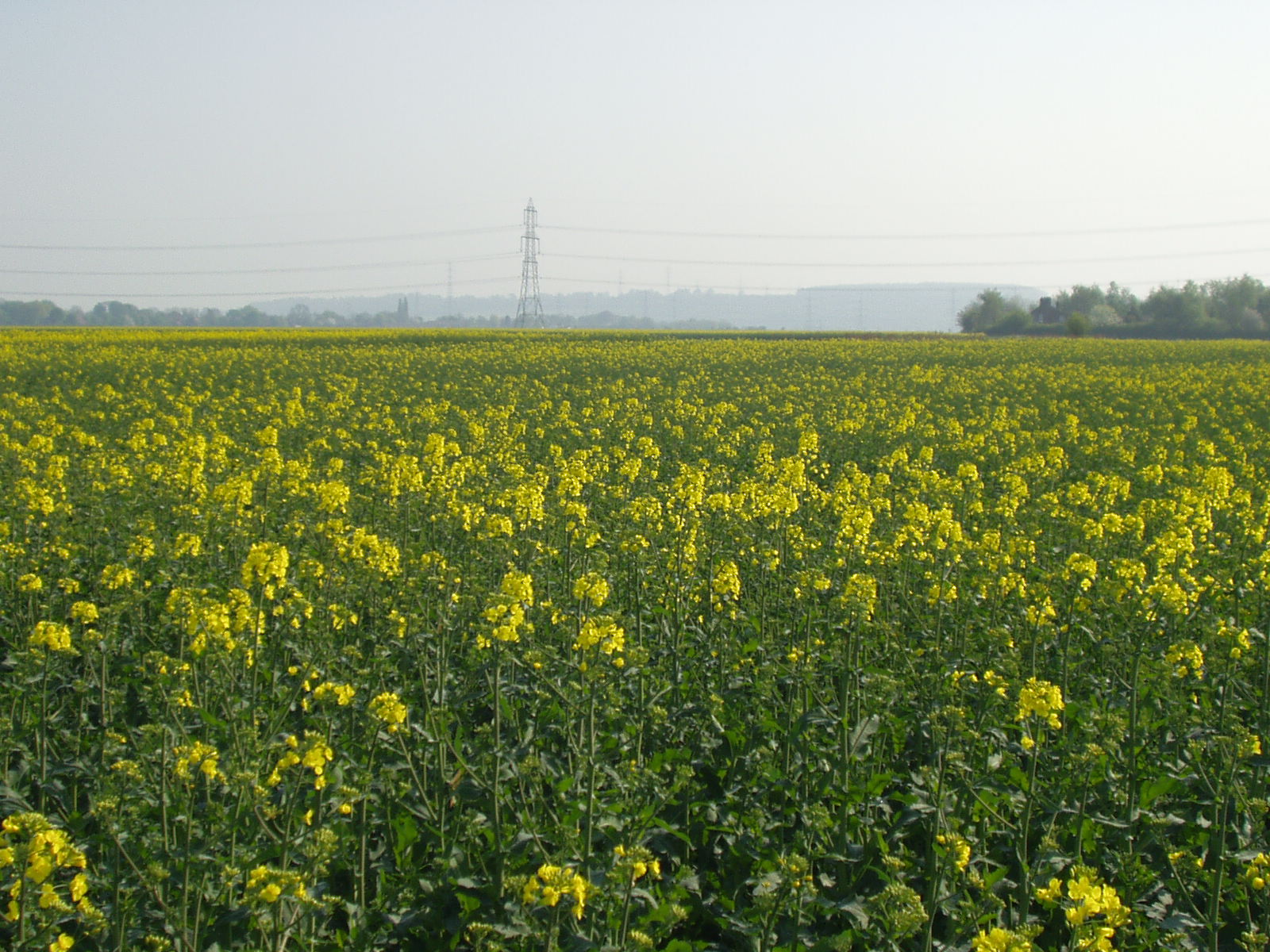
Alas, all this sunshine has caused the early arrival of my nemesis - Rapeseed!
Of all the things to be allergic to, it has to be this stuff. And what is one of the four main crops grown in Lincolnshire? You'll never guess. Here's a clue, I can see 5 fields of it from my house (and fields in Lincolnshire aren't small. The one I'm looking at now is 1km long! And full of rapeseed. Good for biofuel, bad for the sinuses.)

I cause conjuctival swelling & swollen nasal turbinates - ask me how!

Well, at least it's only lasts for a couple of weeks. And I have antihistamines to keep the dreaded mucousy horrors at bay.

Okay, off to turn an old cask into a strawberry planter. Hope wherever you are you have sunshine, good company, and an immune system that doesn't get in a flap in the presence of pollen.

*Wheatley! Curse your sudden but inevitable betrayal!

**And dandelion, and thistle...

Tuesday, 12 April 2011

Brugge it!

Hello, blog.
I'm back from Bruges. Well, I've actually been back for a week now, but been making the most of the good weather (isn't April supposed to be known for its showers?) & been out in the garden (digging, sowing seeds, weeding, pricking out, digging, potting on, weeding, sowing the ten thousand varieties of speckly beans I've been hoarding all winter and did I mention the digging..?).
Unemployment be damned, the tulips are flowering!

The holiday was an unexpected gift - 4 days in the lovely city of Bruges, travelling by ferry (and I'm a fox that likes to get her paws wet), with MikeyFox's family for his fathers 60th birthday. Having never been on a family holiday before, some things took a little getting used to (like Having An Itinerary & being woken up at 7am to Discuss Plans For The Day*). But since it was a free holiday it would be churlish to complain (especially when there were pubs to scuttle off to in the evening).

If you do find yourself in Bruges, I really recommend the Flanders Field tour. Run by the lovely Phillipe Uyttenhove, who takes you in his minibus around Passchendale, Hill 60, the memorials around Flanders where he grew up & the Menin gate in Ypres. It was real pleasure to spend the day with such a knowledgeable person filled with passion for his home & heritage. The website is here and you'll not find a better guide to the area.
(No pictures, folks. Didn't seem appropriate).

A few photos.

The Dijver canal and a weeping peach tree. As you can see, everything in Bruges is freakin' gorgeous.

A tour of the old brewery, De Halve Maan. There is a shiny modern brewery there too, making the famous Bruges Zot (Zot meaning 'fool') the only beer brewed in the city.

View of the city. The fancy pad in the middle is the St Salvatore cathedral

Windmill!

And the finest drinking establishment in all of Belgium, the Staminee de Garre. Tucked away in an alley round the back of the Basilica of the Holy Blood**, it's tiny, and the floors slope so violently that you'll spend the evening trying to stop the tablecloth sliding to the floor & the beers are lovely! If you can find it, try the wheat beer. Try all the beers!

And I'll leave you with this, from the St George Memorial church in Ypres.

A cross stitch tank cushion!
Right. Weeding.

*Which always ended up being stuck between a speed-walker who wants to get the Groening museum (nothing to do with the Simpsons - I checked) & Gruuthus done before 11am and a dawdler fiddling with his camera, while having little have-we-lost-someone episodes.

**Which we visited on the first day, though decided against any fondling of the Holy Plasma, favouring instead lighting a candle for MaFox & The Impending Surgery. Just because I was the only Heathen in Catholic School doesn't mean I'm not prepared to hedge my bets, y'know.

Tuesday, 29 March 2011

I Aten't Dead

Lots has been happening here in the Marshlands. Due to an unexpected attack of nice weather, I've been doing lots of ground work in the garden.
A fence has been put up, so the garden actually ends now, rather than meandering into the neighbouring rapeseed field*, and Edible Hedge planted. A compost bin has also been assembled out of bits of pallet, an old door & UPVC window frames.

Gravel paths have been laid down between the 8 raised beds. Partly for keeping down the weeds, but mostly so Mikeyfox doesn't get muddy paws. The rest of the garden has large stepping stones (all unearthed from the end of the garden, which in January was The Great Crap Pile, but is now the home of 5 fruit trees & a motley assortment of fruit bushes), which will have creeping herbs & alpines planted between them. (Since this picture was taken, the Polytunnel has had a solid wood framed door put in, thanks to Mikeyfox, and the grassy area to the right has been dug over & planted with spuds).

There is also Tomato Mile, which still needs digging over.


It's a long border down the sunniest side of the garden, where I'll be growing tomatoes, tomatillos & squash. the grassy bit on the left has been dug over since this picture was taken, and will be crammed full of legumes.

Speaking of Crammed full of legumes, I cooked some of the Pea Beans (Phaseolus aegypticus) that I grew in last years growing-beans-for-drying experiment

They were delicious, creamy with a rich, chestnut flavour. If you have room for them in your garden, I can't recommend them highly enough. You can eat them as whole pods, young fresh beans or dry them for cooking later. They are really low maintenance too. I didn't eat all the dried seeds, so will be growing lots more this year!

So now I'm off to Bruge for a week of beer drinking. yay!

*Much to the displeasure of the cats

Thursday, 17 March 2011

Pumpkin & Ginger Cake (yes, cake!)

March is proving to be a turbulent month for this little fox. So what better way of dealing with stress than to make cake? And not just cake, but guilt-free, flavour-filled, crammed-full-of-healthy-things vegetable cake.
Now before you run shrieking for the hills, bear with me.
Carrot cake.
Chocolate & beetroot brownies.
If they can work, why not parsnip cake, why not courgette cupcakes, why not pumpkin cake? So over the last few weeks I've been mucking about with vegetables in cakes. Some have been a bit of a disaster (grated carrot in scones? No. Just... no), others need a bit of tweaking before I'm ready to blog about them, but some just come out perfect first time.
Say hello to Pumpkin & Ginger cake

Sweet, spicy & a little bit nuts.

Pumpkin & Ginger cake
3 eggs
100g demerera sugar
250g finely grated pumpkin (or butternut squash)
150g brown rice flour (it gives a really nutty flavour to the cake, and is also suitable for coeliacs. Wholemeal spelt flour also works well. Or half plain flour & wholemeal)
80g ground almonds
100g crystallised stem ginger (or stem ginger in syrup), finely chopped
2" piece of fresh ginger, finely grated
2 tsp baking powder

Preheat the oven to 180C/350F/G4. grease a springform cake tin & dust with a little ground ginger.
Whisk the eggs & sugar in a large mixing bowl until really light & fluffy. It'll take a few minutes. Sorry. Stir in the pumpkin & grated ginger. Add the flour, ground almonds & baking powder & mix gently. Fold in the crystallised ginger & pour into the cake tin. Smooth the top over & bake for 30 minutes in the middle of the oven (or until a skewer poked into the middle comes out clean). Leave to cool, about 5 minutes should do it, before removing it from the tin.
Serve with a cup of tea, and don't feel bad about having seconds.

And on the bad days. the long days, the tough days, the it-can't-get-any-worse days. Have a slice & remember it's just a ride.